Portfolio View
Part of Project portfolio management
Showing shared risks across an active project portfolio
Show shared portfolio risks with affected projects, different consequences, response owners and review triggers.
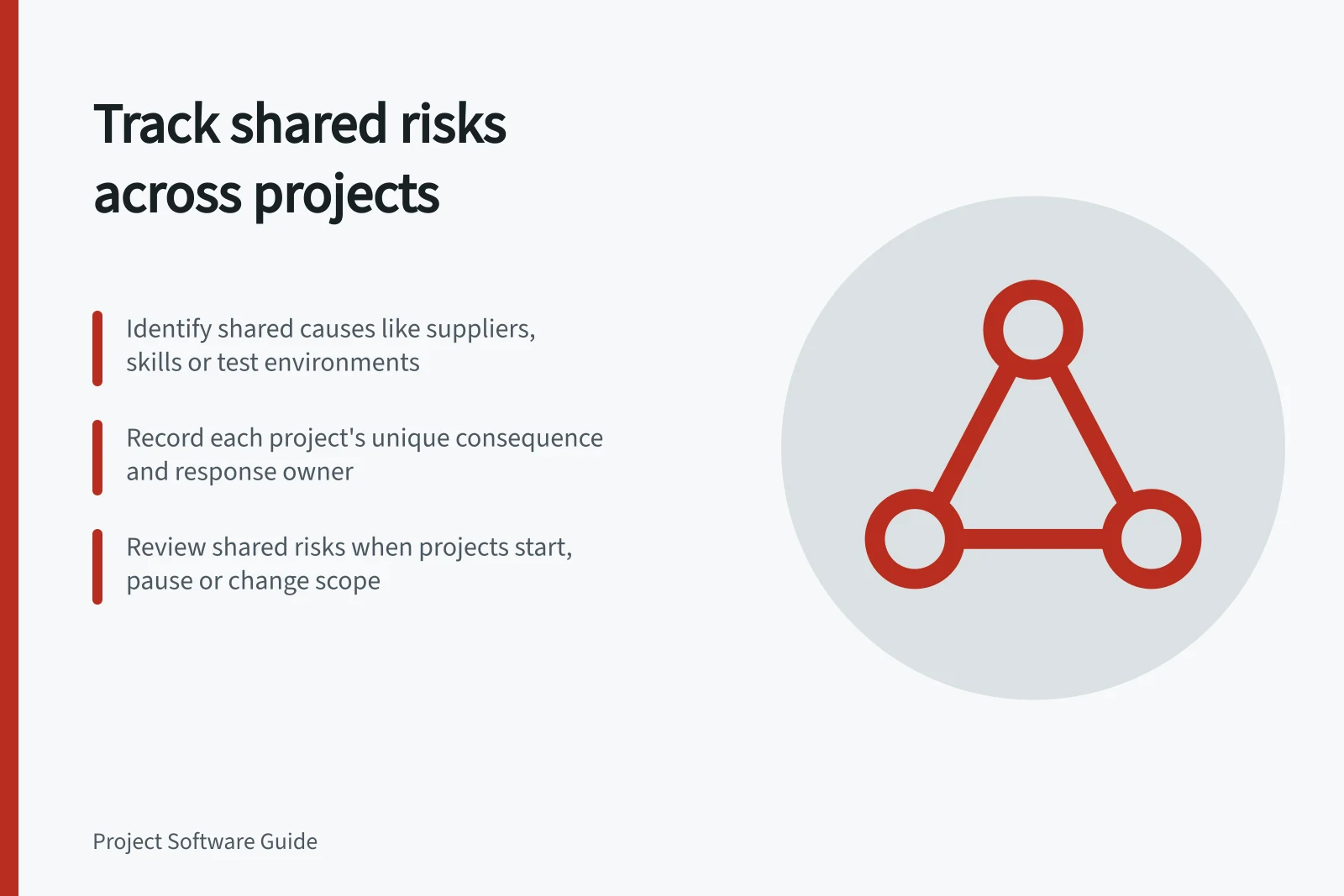
Show a risk shared by active projects with its affected work, possible consequences, response owner and next review point. When projects face the same uncertain cause, a linked shared record can prevent that cause from disappearing among separate logs.
Keep each project’s exposure visible: the same event can have different effects. Risks created by interactions between projects may need links between distinct records rather than one combined entry.
Identify the portfolio exposure
Ask project owners which uncertain events could affect more than their own project. Look for shared suppliers, specialist skills, approvals, platforms and handovers. An output from one project may also be an input to another. These relationships can create exposure even when individual project status labels look sound.
Use the organisation’s agreed distinction between a possible event and a present issue. If a shared test environment may be unavailable when needed, record the risk and its trigger. If it is unavailable at the required time, record the active issue and delivery effect while preserving the earlier assessment.
Current blocked work needs its own operational view.
Show the cause and each consequence
Shared-risk field / What to record
- Event and trigger
- What may happen, and what observation changes its status?
- Affected projects
- Which deliverables, milestones or decisions depend on it?
- Consequence by project
- How the effect differs for each project
- Response owner
- Who coordinates action across projects?
- Project actions
- Who updates each project’s forecast and local response?
- Next review
- When will the exposure and response be checked?
Do not add project risk scores as if they measured independent exposure. Projects may share a cause, and one delay may amplify another. If likelihood or impact estimates are weak, show the uncertainty and the decisions it affects rather than a precise-looking portfolio total.
Suppose two hypothetical projects plan to use the same external testing facility, which may be unavailable during their intended test periods. One project could move its test window; the other could miss a later handover. A shared record would show both possible consequences and who will check an alternative facility. Actual dates and options would need confirmation from the owners.
Put the decision in view
Show the risk beside its affected projects, trigger, response options and the decision needing authority. The organisation might stagger work, secure another supplier or accept revised commitments. State the consequence and decision-maker for each option.
Review the connections when a project starts, pauses or changes scope. Retire the shared risk when its uncertain cause no longer needs a response, while updating the linked project records. If the event occurs, show the active issue and cross-project decision; do not continue to describe the event as merely possible.